How a Church is Rewriting the Future of Math in Kenya
By Samuel Okoth
For as long as I can remember, I have been itching to tell this story. It is a story that began in a primary school classroom with a "magical" teacher named Mr. Odula Muok, who turned Friday mornings into thrilling adventures. It is a story that continued through the mentorship of educators in high school, who taught me to see mathematics not as a set of rules, but through a "third eye" of critical thinking.
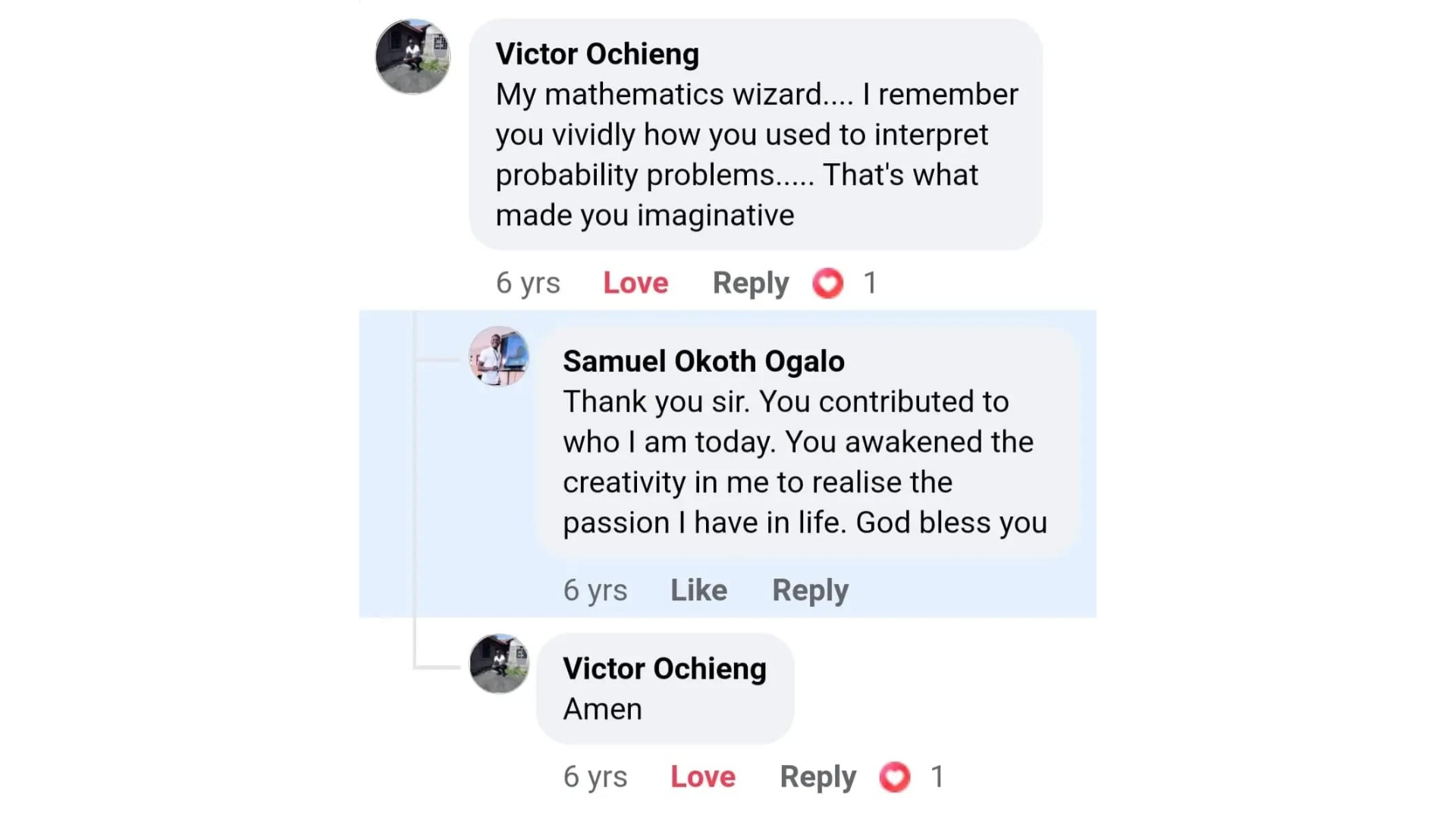
A screenshot of a Facebook conversation between Samuel and his former teacher, Mr. Victor, years after high school, reflecting on Samuel’s lasting interest in mathematics, particularly probability.
Mr. Victor Ochieng became known among his students for promoting the idea of the “third eye,” a metaphor drawn from ancient traditions where it represents intuition and perception beyond ordinary sight. He used this concept to challenge students to avoid rote memorisation and blind procedure-following, urging them instead to think critically, seek connections, and experience mathematics as both beautiful and enjoyable. But today, the story isn't just mine. It belongs to a community.
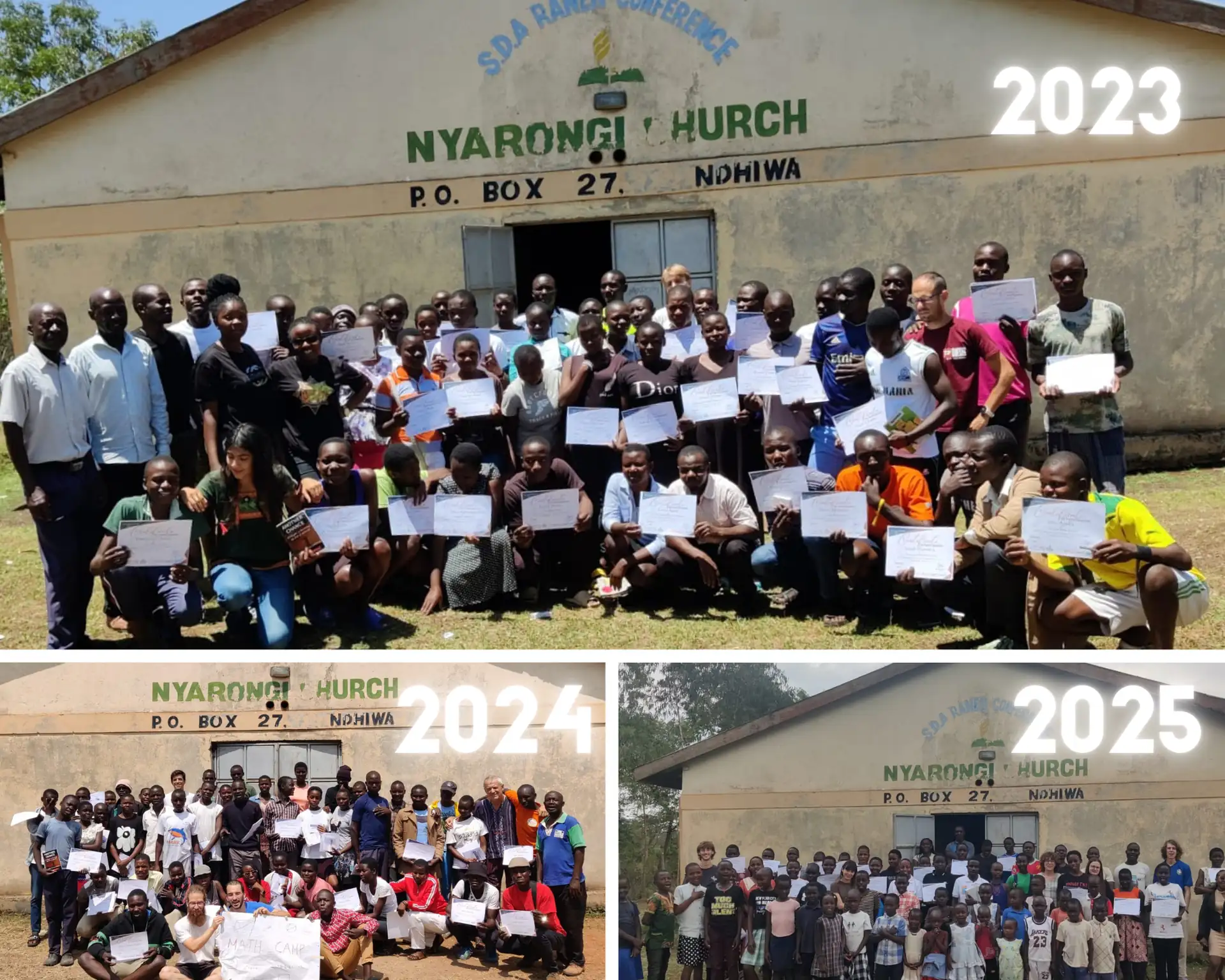
Over the last three years (2023–2025), a quiet revolution has taken place at the Nyarongi SDA Church in Homa Bay County, Kenya. What started as a dream to bridge the digital divide has blossomed into the Nyarongi Community Annual Maths Camp—a movement that has since transformed 196 young lives and turned a local place of worship into a high-tech innovation hub. This partnership between faith and education is a long-standing tradition here; in fact, the neighboring Nyarongi Secondary School was originally founded through the church’s leadership and community-led fundraisers. By allowing families to contribute farm produce toward school fees, the community ensured that students could remain in the classroom without the constant interruption of being sent home for payment, thereby maximizing every hour of instructional time. This same spirit of local resilience and resourcefulness now powers our work today.
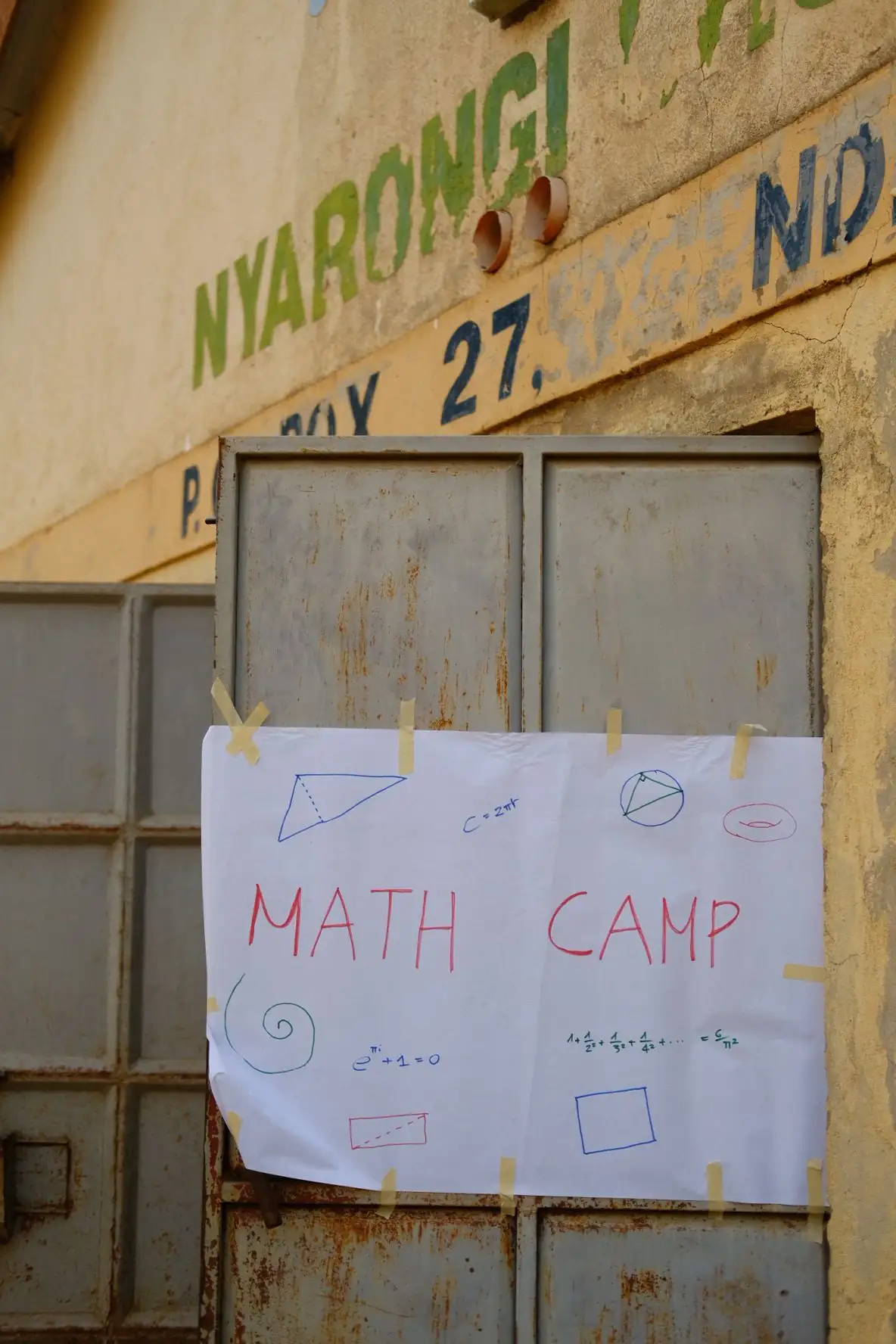
Nyarongi is a vibrant community in Kanyadoto Ward, of approximately over 10,000 residents, a division in Homa Bay’s Ndhiwa Sub-county, serving as a demographic mirror of Kenya itself where at least 70% of the population are youth. Despite this immense potential, Nyarongi—like most rural parts of the country—lacks a library, a STEM hub, or an innovation center to support students as they transition into a national curriculum where 60% of learners are now expected to pursue STEM pathways.
When we launched the first camp in 2023, we refused to wait for a dedicated building to bridge this divide; instead, we looked to the heart of the community and transformed the local SDA church into a high-energy "innovation lab" for the next generation of thinkers.
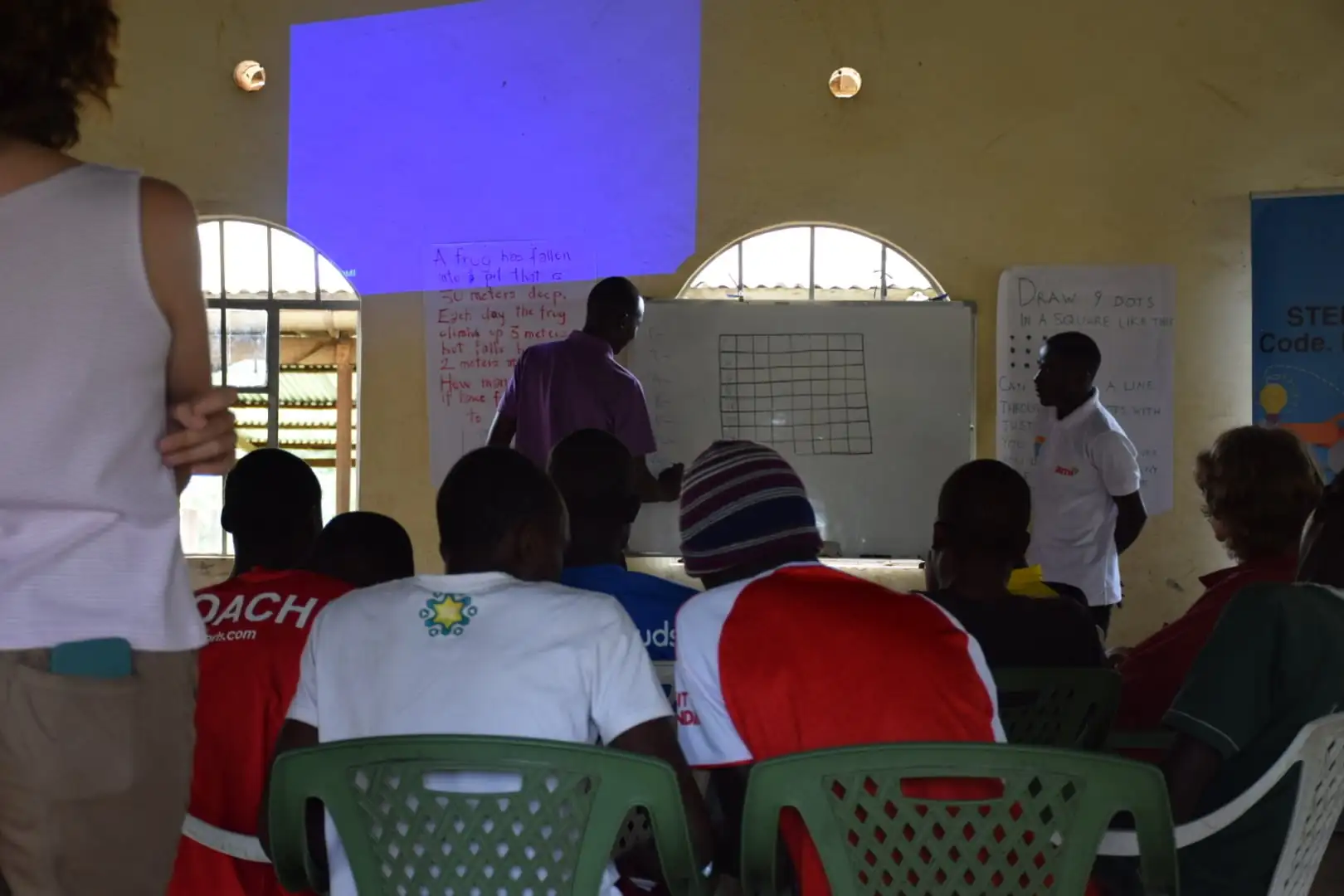
The logistics were a masterclass in "scrappy" innovation. We turned wooden pews into computer desks. We carried in a single printer and a projector, relying on a handful of volunteer laptops—often just 10 computers for 70 eager students. When the power went out (as it often does), we spent the night charging devices whenever the grid flickered to life. We improvised whiteboard stands and projected mathematical proofs onto the narrow strips of wall between the church windows.
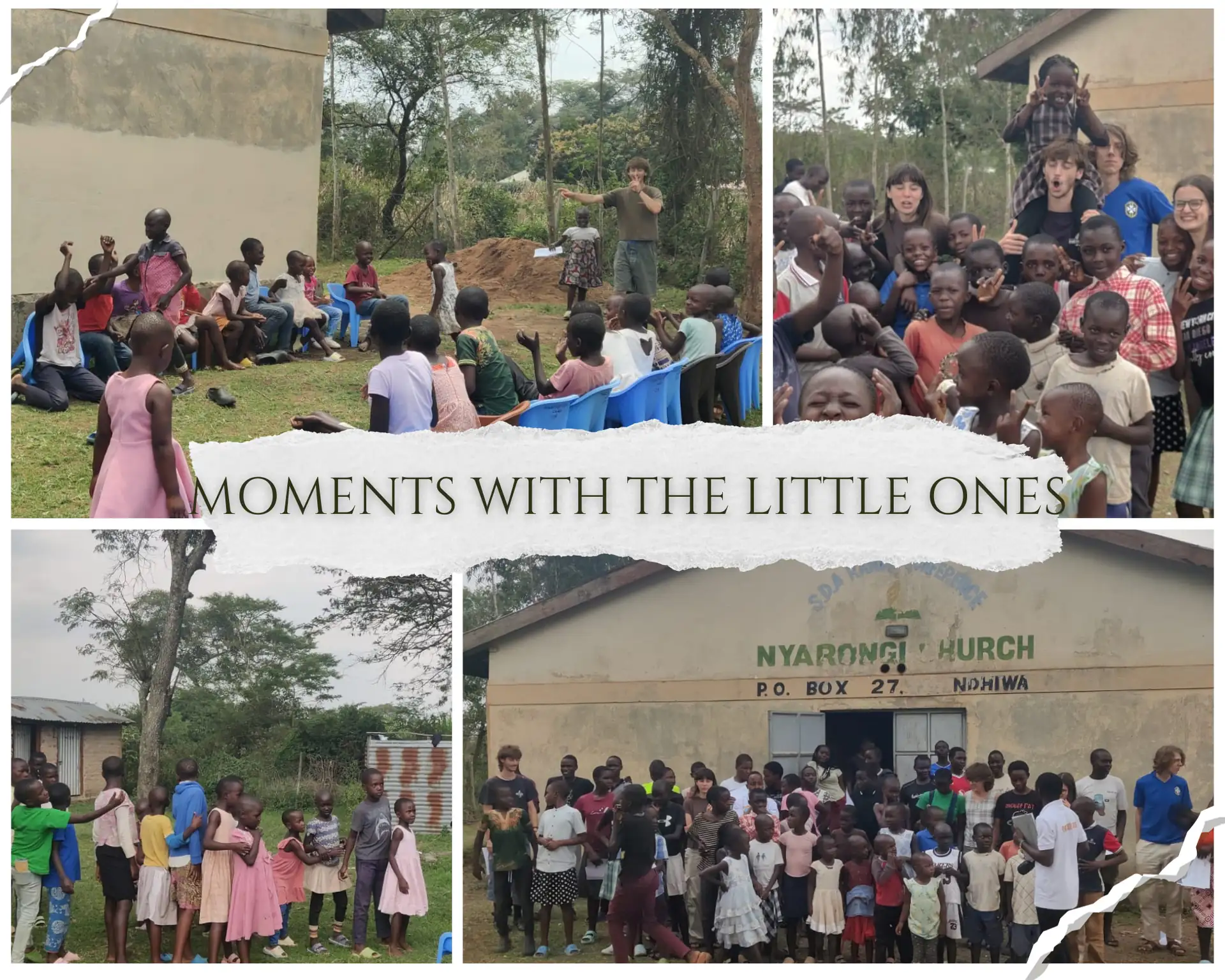
Even more surprising was the "Playgroup" phenomenon. Every day, 30 to 40 children—some as young as two years old—showed up simply to be part of the energy. We had to innovate on the fly, designing outdoor hands-on sessions for these "littles" whose enthusiasm often rivaled their older siblings.
Dismantling the Fear of Math
In Nyarongi, "technology" used to be something seen only in textbooks or on distant television screens. But during our camps, it became a tool for creation. As a 2023 PhET Fellow, I wanted to ensure our students weren't just "using" computers—they were using them to dismantle the fear of complex mathematics.
One of our most profound "Aha!" moments was The Plinko Effect. Traditionally, Binomial Expansion is taught through dry formulas. Alongside Dario Domingo, a statistician from Durham University, we did it differently. We started on the church floor, role-playing a Galton Board where students acted as "beads" making random choices to go left or right.
To see the true pattern, you need thousands of repetitions—something impossible to do by hand. We moved to the laptops and opened the PhET Plinko Probability simulation. Suddenly, the connection between a falling bead and Pascal’s Triangle became visible as a "Bell Curve" formed in seconds.
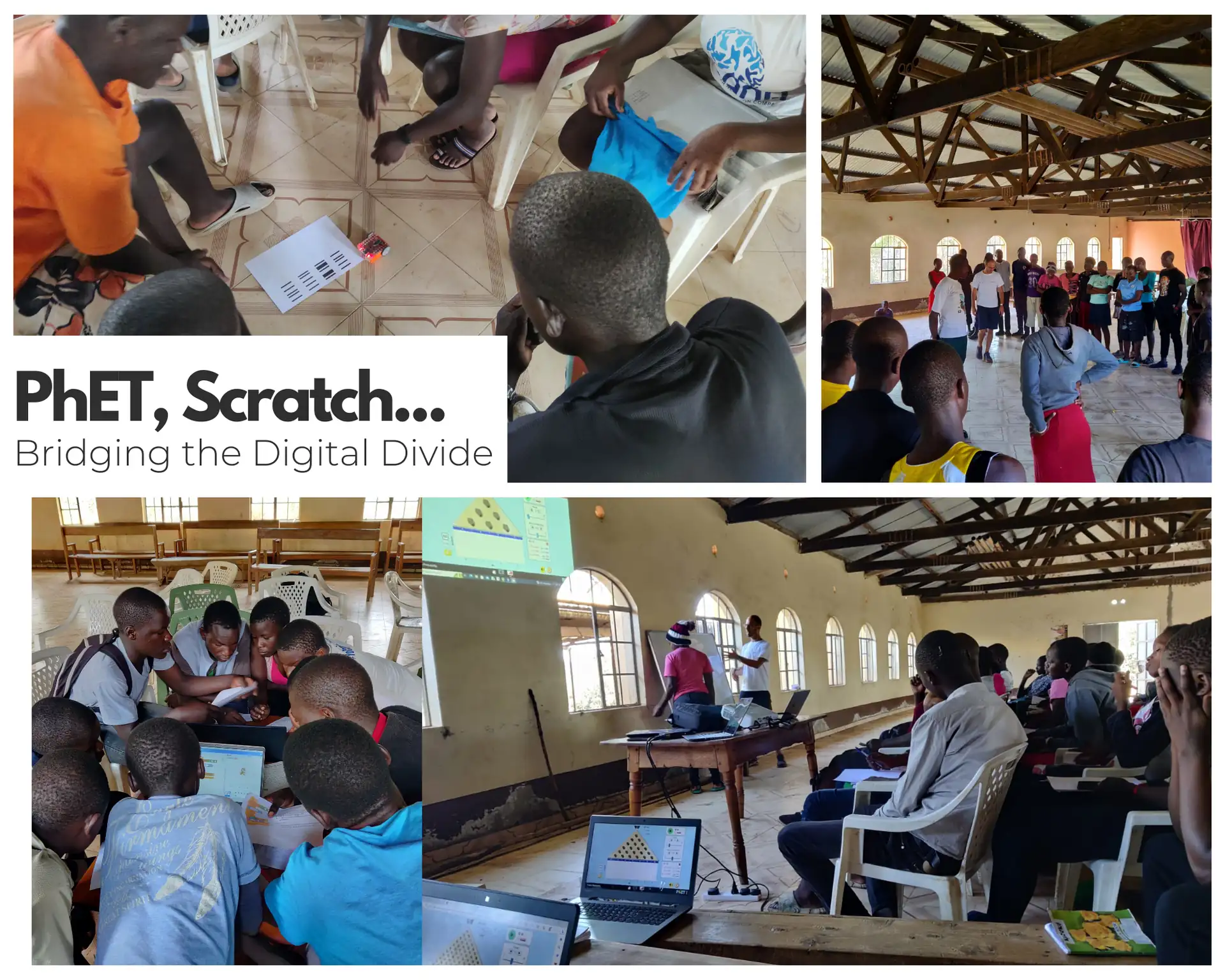
The atmosphere shifted again with the arrival of Edison Robots. For many, this was their first time touching a computer, let alone commanding a robot.
We didn't teach "Robotics" as a separate subject; we taught it as Computational Thinking. Using Scratch, students began to "code to learn," programming their robots to navigate obstacles and even "sumo wrestle." They were no longer consumers; they were creators. As one student reflected in their journal: “I have learned how Edison can be programmed... I can teach or help anyone now.”
Breaking the "Wazungu" Barrier
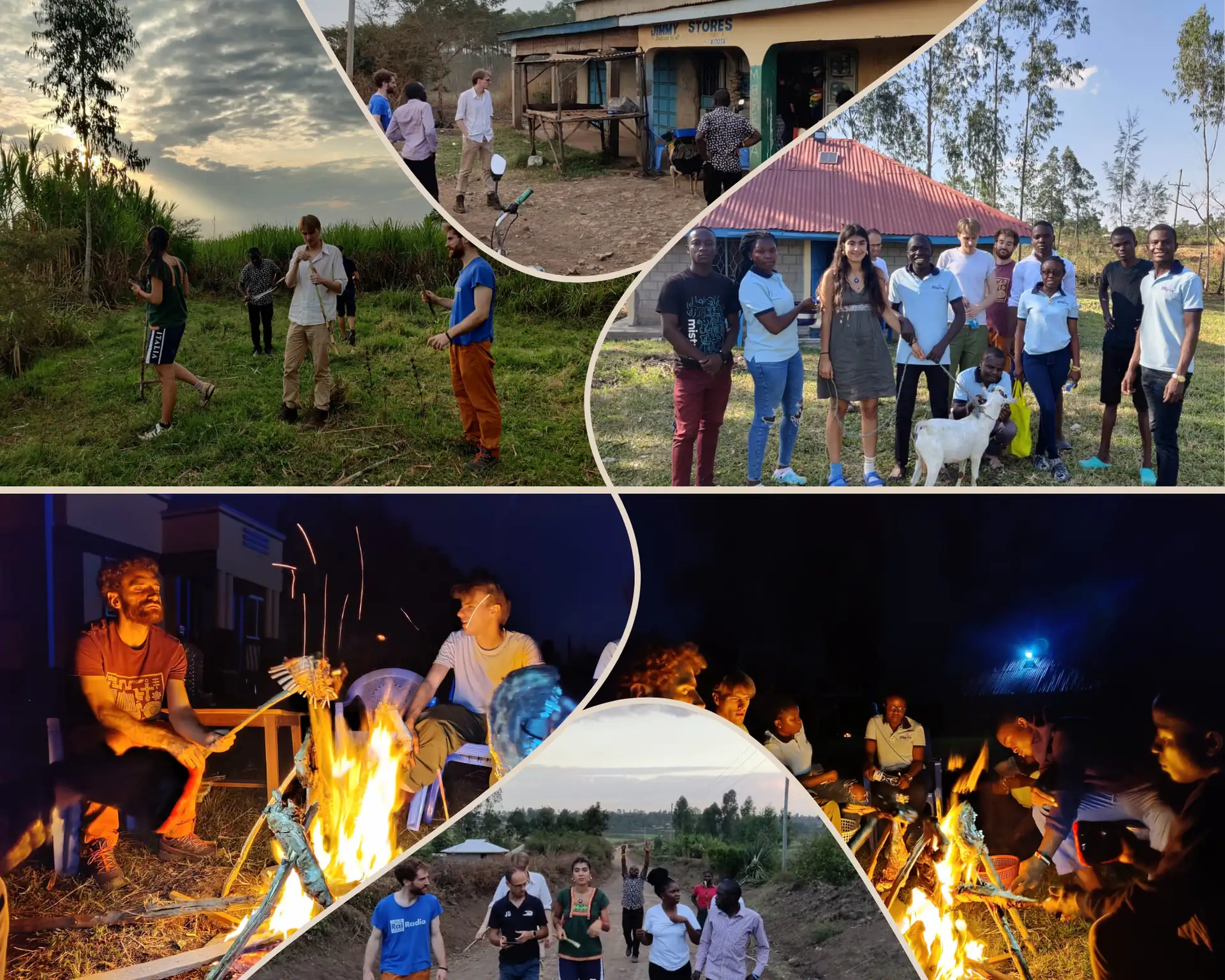
One of the most beautiful aspects of the Nyarongi camp is the cultural bridge. Over three years, we have hosted 15 international volunteers from places like the UK, Italy, Germany and France, alongside 10 local facilitators from AMI and INNODEMS.
Initially, there was a language barrier. Students struggled to understand the "Wazungu" accents. But the barrier didn't break in the classroom; it broke in the village. In the evenings, students invited volunteers for walks through the community and into their homes. The students became the teachers, giving lessons in Luo and Swahili.
By the time we introduced the Tower of Hanoi or Venn Diagram logic sessions, the rapport was already built. The students realized that these "international experts" were just people who loved puzzles as much as they did. By Day 5, the common refrain was: "Please don't leave."
The Full Circle: Mercy and Peter
The true measure of a program is what happens when the facilitators leave.
In 2023, a student named Mercy attended our first camp. Like many, she initially felt that math was a barrier—something to be feared. But through the camp’s immersive games and the "Quick Maths" energy, her perspective shifted. By the second year (2024), Mercy was one of the three learners who were gifted after emerging the best through token system. Today, Mercy is one of the 20+ students from our camps who have successfully joined universities and colleges.
But the story gets better. In 2025, Mercy and another former student, Peter, returned to the camp—not as participants, but as volunteers. Seeing them move from "learners" to "mentors" is the ultimate proof of sustainability. They are the living evidence that when you change a student's relationship with math, you change their trajectory for life.
The Vision for 2026: From Camp to Hub
As we look toward our fourth year, we are at a crossroads. Kenya is transitioning to a new curriculum where over 60% of students in Grade 10 are expected to choose a STEM pathway. In rural areas like Nyarongi, the "STEM awareness gap" is still a massive hurdle.
Our success has led to the founding of STEMpathy Hub Africa. Our "Big Goal" for 2026 is to move beyond a once-a-year event. We are dreaming of a permanent presence—perhaps a container-sized mini STEM center or a mobile library—where the "camp spirit" can live year-round.
We have moved from a "volunteer-dependent" model to a "community-owned" vision. The Church Elders, who once saw this as "extra classes," now see it as a vital part of their community's growth. The parents, who tell us stories of their children coming home to teach their siblings new math games, are our biggest advocates.
Mathematics is not just a subject; it is a bridge. In Nyarongi, we are building that bridge together—one grain of wheat, one church pew, and one student at a time.
How You Can Help
The Nyarongi Community Maths Camp has always been sustained by the generosity of SAMI supporters and international volunteers and the dedication of local volunteers from AMI & INNODEMS. As we transition into the STEM Youth Bootcamp model for 2026, we invite you to join us. Whether through donations to STEMpathy Hub Africa or by volunteering your time, you are helping us make history in a small village with very big dreams.
Together, let’s unlock the magic.