
Transforming Learning Environments
Have you ever heard of the concept of "talking walls" in classrooms? Imagine a learning environment where visual elements play a crucial role in enhancing the educational experience for both teachers and students. This is exactly what the Happy Classroom project aims to achieve - a transformation in schools through innovative pedagogy and engaging instructional materials.
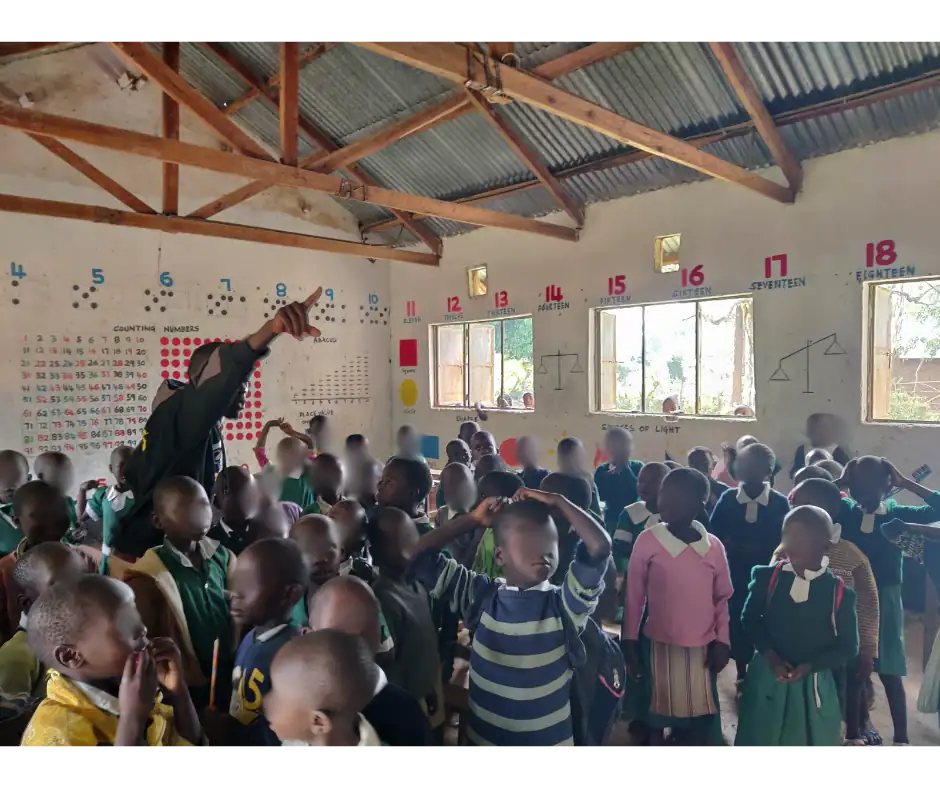
“I've come to realize the significance of what teachers now affectionately call the "talking walls." Following our Happy classroom project, our visits to the schools have become a regular part of our routine. What struck me in 2024 was the noticeable difference from our previous visits, which I attribute to the lessons learned and the ongoing process of reflection.”
- Owen Mulinya Kizito - Educator, African Maths Initiative
The Happy Classrooms Initiative is a program aimed at transforming learning environments in schools by implementing a structured pedagogy approach. This involves enhancing instructional materials to create visually engaging classrooms and offering Teacher’s Guides with scope and sequence, training, and continuous support to teachers through a community of practice. In the 2023/2024 phase, the project expanded to 13 new classrooms in 7 schools across 5 counties in Kenya, benefiting 664 additional students (456 boys and 208 girls) and 26 teachers. This blog highlights recent visits to these new schools, which are part of the program's expansion into four new counties (Kisumu, Busia, Siaya, and Migori) in Kenya, broadening its impact and promoting educational equity in underserved communities.
“The resources make students arrive early so that they can just read the sounds and alphabetical letters. We used charts before but the walls do more talking compared to the previous times. The classes are now beautiful and the walls speak louder. Grade 3 students wish to go back to grade 2 just for them to use the resources painted on the walls.”
- Headteacher, Madibo Primary School - Busia County

Fig: Happy Classroom Projects in Kenya - https://www.google.com/maps/d/viewer?mid=1Or0rw0JCcreKLETazKulmNuFWQwYZH1N&hl=en&usp=sharing
As we reflect on our journey with the Happy Classroom initiative, it becomes evident how small changes can make a significant difference. Visiting schools as part of our routine, the year 2024 brought about noticeable improvements compared to previous visits. These positive changes are a result of the lessons learned and our commitment to continuous reflection and growth.
The follow up sessions aimed to:
- Establish a community of practice among teachers to foster collaboration and shared learning.
- Encourage teachers to journal their reflections, promoting self-assessment and professional development.
- Conduct small group sessions with students to enhance engagement and participation.
- Reinforce the importance of the activities displayed on the walls, creating a visually stimulating learning environment.
“It was a joy to witness students engaging with the walls, reading independently, and actively participating in discussions with their peers. What stood out was not just the culture of receiving positive feedback, but the meaningful insights shared that will continuously improve the project. Teachers, too, were visibly motivated by the impact on their classes. They appreciated the reduced time spent preparing charts and the accessibility of learning materials for their students at all times.” added Owen
The project aims to attain high-quality learning outcomes and establish a replicable model applicable to all educational settings in Kenya, fostering the principles of the Competency-Based Curriculum. With the expansion to more counties, the project brings about enhanced access to updated learning materials aligned with both national and international educational standards. These resources are designed to facilitate innovative teaching and learning methods, fostering creativity, communication skills, problem-solving abilities, and analytical thinking among teachers and students. This initiative heralds the commencement of personalized learning feedback for each student, leading to improved learning outcomes, heightened learner engagement, and increased attendance rates.
“We look forward to actively engaging teachers in regular feedback sessions to track learners' progress, providing targeted attention to those who require additional time, and ensuring full transparency in their classrooms to support formative assessment. This approach aims to increase learning speed and enhance teachers' understanding of their students. Additionally, we are committed to addressing research gaps concerning classroom environments, including the impact of happy classrooms on foundational numeracy.”
- Samuel Okoth Ogalo, Project Lead - Happy Classrooms

Fig: Illustration depicting the pathway of the Happy Classrooms Project.
“The project has reduced absenteeism among the learners, they just want to come and use the resources in their walls. It has made students self-driven, they learn on their own when the teacher is not in class. Students grasp content very fast, especially the one covered in their talking walls. The resources build a good foundation for the learners. The resources have made learning very fast, and syllabus coverage is timely.
Students in grade 1 and 2 now own their classes, they cannot allow other students to interfere with the resources painted. They use a pointer, not fingers, just to maintain the walls. Grade 2 for example have 2 streams with 70 Students each, therefore they use rotational learning to allow all learners to use the talking walls.
Students can now see and read, especially the alphabetical letters, numbers. Parents are very happy, parents with children in the neighboring schools are now transferring the kids to their school just to interact with the talking walls, and the population of the school is shooting up. Font used on the walls is large, therefore very visible.”
- Headteacher, St. John Sibembe Primary School - Busia County

Fig: Image of a Grade 2 classroom before, with termites occupying a corner, constructing their habitat during the holiday.

Figures: Grade 2 classroom before and after with students in Happy Classroom at St. John Sibembe Primary School - Busia County.
The importance of providing teachers with support in utilizing a variety of resources beyond visual aids clearly pointed to the teachers need for guidance on making the Competency-Based Curriculum (CBC) implementation not only manageable but also enjoyable for students. This highlighted the crucial role of our community of practice in supporting teachers through this process.
The Happy Classroom initiative is not just about transforming physical spaces; it's about creating a supportive and engaging learning environment where both teachers and students thrive. Through collaboration, reflection, and a commitment to continuous improvement, we are witnessing the positive impact of this innovative project on education.
“The school at large appreciates the work done. The resources are very useful in teaching. Teachers now spend less time in lesson preparation. It's a good transformation of the classes (the walls were very dirty before, it has made the school to paint the other classes at least for uniformity). Learners are now fully engaged (they can read and learn when the teacher is not around). Talking walls cut costs for resource acquisition, especially the charts. Colors used are attractive, making learners interact with the resources even more. Used charts before (gets torn out easily), walls do more of talking compared to previous times. The resources create interests in learning for the students, one student leads the others in using the resources.”
- Grade 2 Teacher, Naora Primary School - Kuria, Migori County

Fig: Picture of Grade 3 students in their brilliantly painted, normal classroom environment.


Fig: Pictures showing Grade 1 classrooms before and after, with learners in their happy classroom
“I learned a valuable lesson when I saw how much assistance the teachers required in order to use a variety of resources outside of just painting materials. They looked for advice on how to make the Competency-Based Curriculum (CBC) implementation for the students not only manageable but also pleasant. This demonstrated how crucial our community of practice is to supporting this process.” - Owen
Join us on this journey of transformation and discovery as we continue to enhance classrooms and empower educators to create inspiring learning experiences for the next generation. Together, we can make a difference in education and shape a brighter future for all.
“The one-week follow-up visit reaffirmed the enduring impact of resourceful walls on teaching and learning. As we move forward, it is imperative to build on these successes and address emerging challenges collaboratively. The sustainability of this initiative is a testament to the transformative power of intentional and visually stimulating learning environments. Our commitment remains unwavering: to continually refine and expand this model, ensuring that every classroom becomes a vibrant space that transcends chalk-and-talk conventions, fostering a love for learning among students.”
- Talu Lucian Mayabi, Educator - African Maths Initiative
Author: Samuel Okoth Ogalo
Samuel Okoth is an experienced Educator and passionate advocate for innovative teaching methodologies, with expertise in Science Education and Mathematics.
Contact: +254708876462
Email: kogallohsamuel@gmail.com