Mathematics for Sustainable Development in Benin
In August 2025, the quiet rhythm of Dangbo was interrupted by something electric. Classrooms filled with laughter, heated debates, and the scratch of chalk on boards. Motivated by the theme: “Seeing the invisible, solving the impossible”, this was the second edition of the Benin Maths Camp, supported by Supporting African Maths Initiatives (SAMI) in collaboration with IMAC-Bénin and IMTogo.
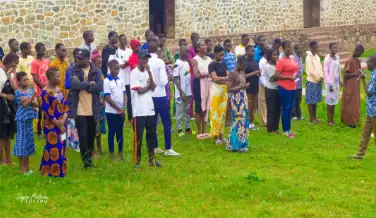
For many learners, mathematics had long meant formulae copied from the board. The camp set out to change that perception.
Over five days, students from six departments at Benin worked on puzzles, logic games, cryptography tasks, and simple data-collection activities. Exercises such as the Vigenère cipher helped them practice pattern recognition, abstraction, and basic modeling. These activities prepared them for the next stage of the camp, where they applied these skills in introductory Python and robotics sessions. In this way, the program connected mathematical thinking with practical computing and hands-on technological work.
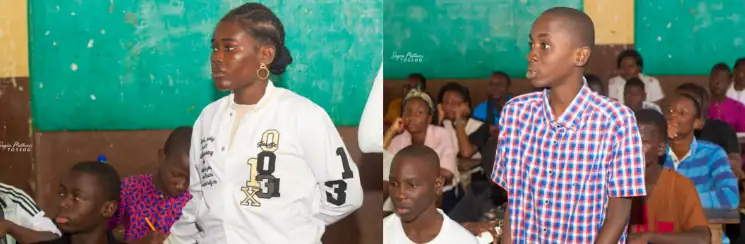
Girls and boys solved problems side by side, competed in logic games, and led group strategies—an intentional step toward universal educational opportunity.
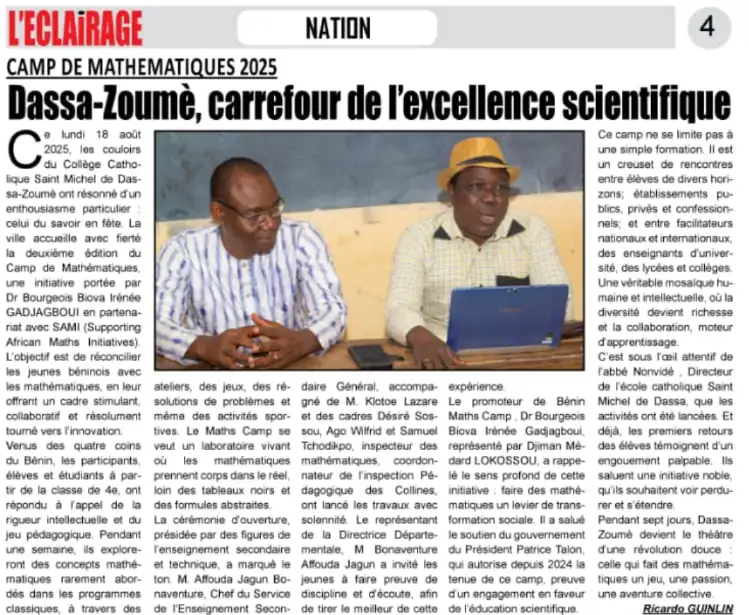
The camp attracted the attention of local and national authorities and was covered by national media, including newspapers such as La Nation, placing mathematics education on the public agenda. Dangbo challenged a persistent myth: that advanced STEM requires advanced infrastructure. With minimal resources but strong pedagogy, students engaged in cryptography, logic, and systems thinking.
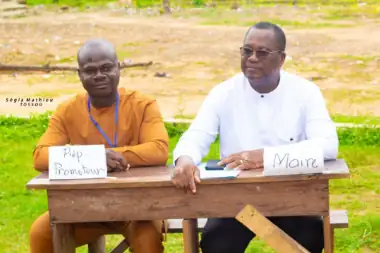
By the closing ceremony, local leaders were not just applauding—they were committing. The Mayor of Dassa pledged to propose a budget line for future Maths Camps, embedding the initiative into local governance.
The Benin Maths Camp 2025 demonstrated growing interest in collaborative, inclusive mathematics learning. It brought together students from different backgrounds, encouraged participation across genders, and connected local activities with wider STEM practices.
As SAMI continues its work, Benin is becoming an active contributor to this network. Experiences from places such as Dangbo are helping shape future camps, while local educators and students build confidence and share ideas that can be adapted in other contexts.