
Inside the 12th BDU Math Camp
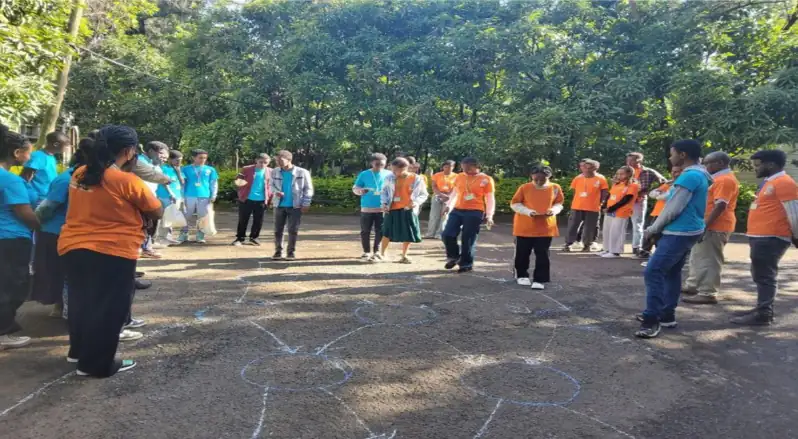
A Campus Alive with Curiosity
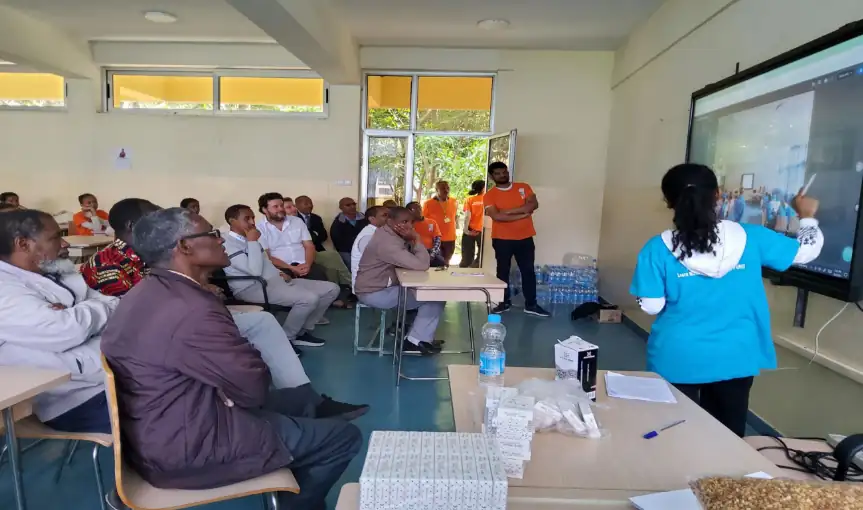
For the 12th time in July 2025, Bahir Dar University (BDU) transformed into a living laboratory of ideas, bringing together fifty-five secondary school students—aged 15 to 17, and notably with more girls than boys— from fourteen schools across Bahir Dar city, curious, and excited for mathematics .
From early-morning reviews to evening problem-solving games, the campus buzzed with energy. Mathematics spilled into maker spaces, sports fields, and late-night discussions in dorm corridors. This was the 12th BDU Math Camp, held under a motto that has guided the program since 2013: “Learning Mathematics Through Fun.”
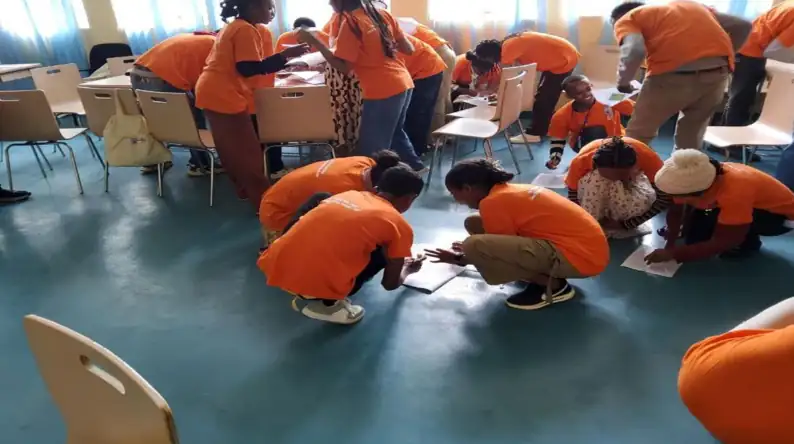
The camp sessions like epidemic modeling and cryptography using modular arithmetic demonstrated how the local mathematical talent is nurtured, connected globally and applied meaningfully. The students engaged in programming and robotics sessions through Arduino robotics, other sessions in sorting algorithms, and dynamic geometry with GeoGebra. These were introductions to modern research thinking—how to model real-world systems, test assumptions, and reason with data. The camp activities aimed to close a long-standing gap: the reliance on outdated approaches to mathematics education, inviting students to encounter mathematics as it is practiced today—computational, visual, collaborative, and deeply connected to science and society.
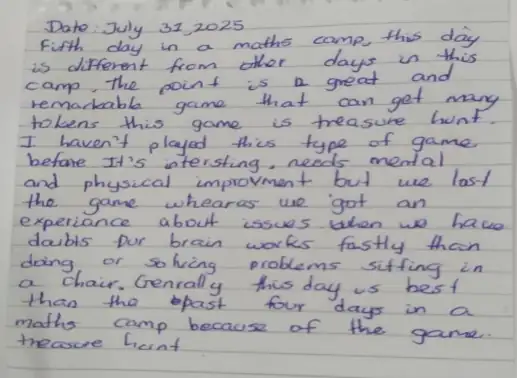
One of the most telling features of the camp was its feedback loop. Students kept daily journals—anonymous reflections on what challenged them, what excited them, and what they wished to learn next. Facilitators actively used these insights to adjust sessions in real time, embodying demand-driven change throughout the camp.
The house system amplified this sense of ownership. Named after figures like Timnit Gebru and Abeba Birhane, alongside Alan Turing and Bernhard Riemann, the houses sparked conversations about ethics, history, and representation in mathematics and AI. For many students, this was the first time they saw African scientists positioned naturally within global scientific narratives.
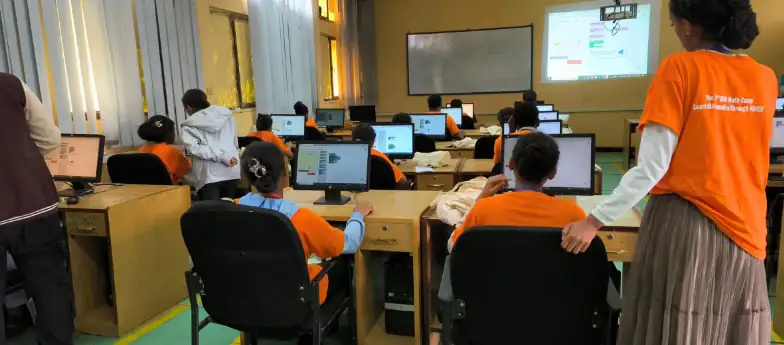
A persistent myth suggests that low-resource environments limit innovation. The BDU Math Camp challenged this head-on. With modest infrastructure but strong intellectual design, students programmed in Scratch and Blockly, explored robotics, and conducted physics-based modeling experiments.
Supported by SAMI and enriched by digital resources, the camp demonstrated how thoughtful pedagogy and community commitment can unlock world-class learning experiences even in resource-constrained settings .
The methods applied here—team-based problem solving, early exposure to research tools, reflective practice—are not just relevant to Ethiopia. They offer insights for mathematics education worldwide, particularly for systems seeking to democratize access to deep, rigorous STEM learning.
Mathematics, as the 12th BDU Math Camp made clear, is not only for future PhDs. It is for vocational innovators, teachers, engineers, and citizens who will model epidemics, design algorithms, and make evidence-based decisions.
SAMI invests in maths camps to build an Africa that participates as an equal partner in global knowledge creation—confident, capable, and connected.