Eleven Years of Building Math Confidence in Accra: The 2024 Allotey Maths Camp
In July 2024, the Allotey Maths Camp returned to the AIMS Ghana campus, marking its eleventh year. Eleven years of bringing secondary school students together to enjoy thinking, play games, exchange ideas, and slowly realise that mathematics is not something to fear, but something to explore. Over time, this camp has become more than a yearly activity. It has grown into a tradition that students across Ghana hear about long before they arrive, often with curiosity and quiet anticipation about what makes it different.
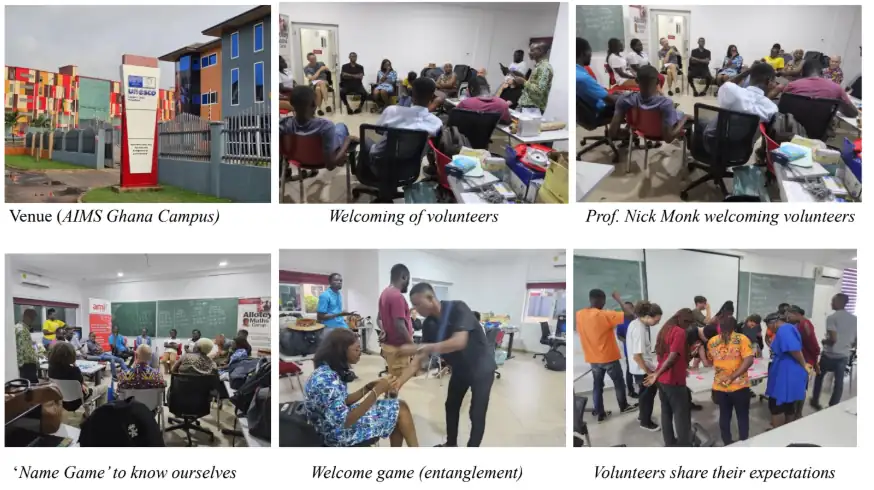
The 2024 camp ran from 29 July to 10 August, bringing together 53 students and teacher participants alongside 20 volunteers. Some of these volunteers came from Ghana, while others travelled from the United Kingdom, Italy, and other countries to work side by side. Many of them had never met before this week, yet they quickly formed working teams, united by a shared responsibility to prepare a learning experience that would challenge and support the students in equal measure.
Preparation for the camp did not begin in July. It started months earlier, in February, through regular online meetings that continued steadily until the final week. When volunteers eventually gathered at the AIMS Ghana campus, they spent a full week carefully planning, reviewing activities, testing games, simulating lessons, and adjusting materials based on feedback. Some ideas worked immediately, while others had to be redesigned or simplified. Local organisers from AMI Ghana led this process with confidence, while international volunteers contributed their experience and ideas. It was a practical example of collaboration, where materials were built together and improved through discussion rather than handed down ready-made.
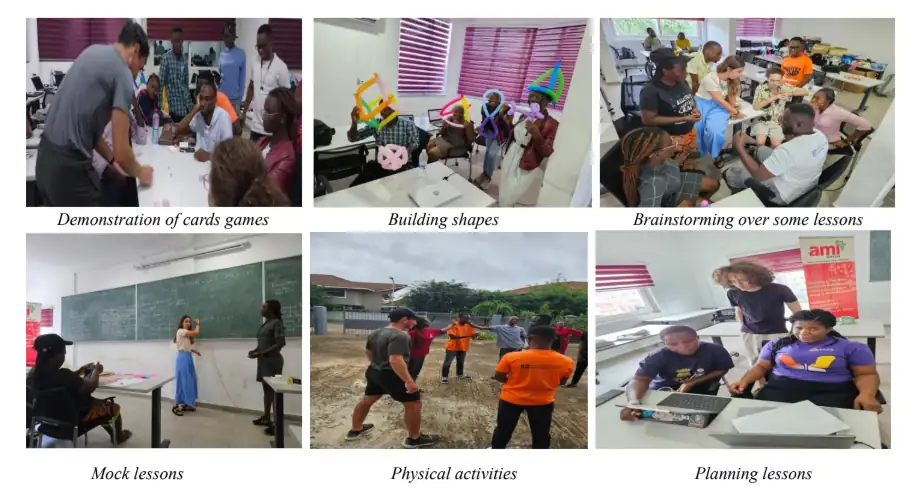
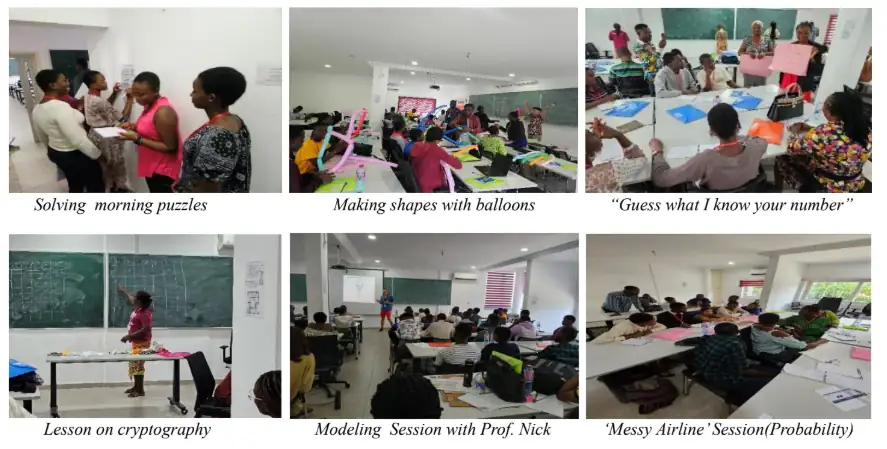
The AIMS Ghana campus itself played a quiet but powerful role in shaping the experience. Students stayed nearby, shared meals, and moved together between sessions from early morning until late evening. Puzzles were posted during breakfast so that the day began with thinking, not waiting. After dinner, small groups gathered around tables to play card games that sharpened strategy and patience. Each night, students listened to short biographies of mathematicians such as Hypatia, Abdus Salam, Ada Lovelace, and Francis Allotey, helping them see mathematics as a human story shaped by real people rather than distant symbols.
From the moment students arrived on 4 August, the structure of the camp made it clear that this would not feel like a typical classroom experience. Instead of lectures and rows of desks, students were organised into houses named after mathematicians, earned tokens for teamwork, and worked within a clear set of rules that they were encouraged to question and refine. This structure gave them both direction and ownership, helping them feel responsible not just for their own work, but for the success of their teams.
The sessions themselves moved far beyond what most students encounter in school. During cryptography lessons, students learned about binary numbers and Caesar shifts, sending coded messages across rooms and testing whether other groups could decode them correctly. At first, confusion was common, but patterns slowly began to emerge as students recognised how symbols and logic worked together. Probability sessions took learning onto the floor, where students played games such as “Messy Airline” and “Don’t Aim,” tossing coins and measuring distances across tiles. Some struggled to make sense of the results, yet persistence revealed patterns that turned random movement into measurable outcomes.
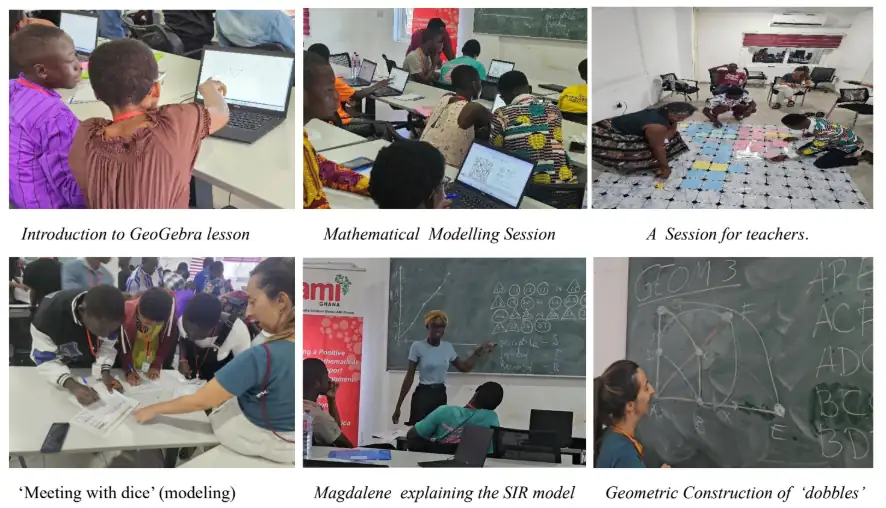
Programming sessions left a lasting impression on many participants. Students used R-Instat to explore number types they had never encountered before, opening conversations about how mathematics supports data and decision-making. In another activity, students acted as “human robots,” following instructions step by step to understand how commands shape outcomes. Later, they created simple interactive stories using Scratch, experimenting with sequences and logical structures. Not everything worked perfectly. Internet connections slowed progress, and some accounts failed unexpectedly. Yet students kept working, adjusting their approach and learning through small failures. That honesty became part of the learning process, showing that progress often comes through persistence rather than smooth execution.
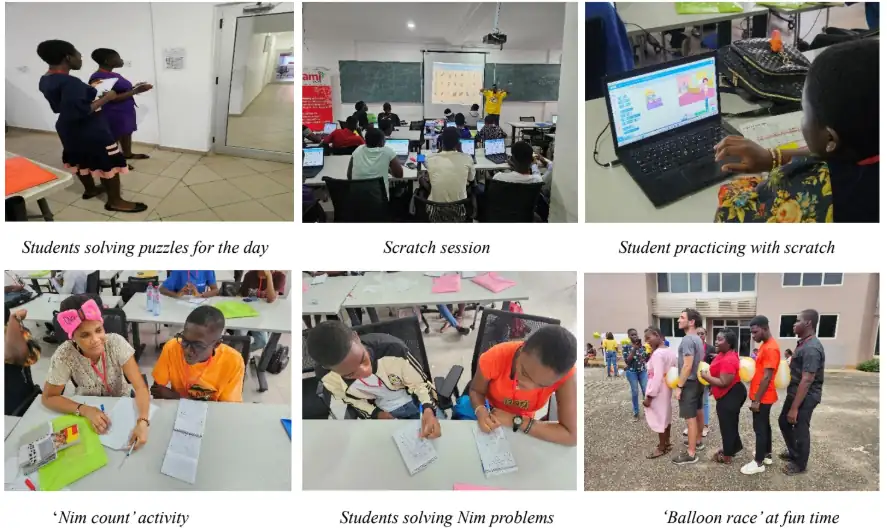
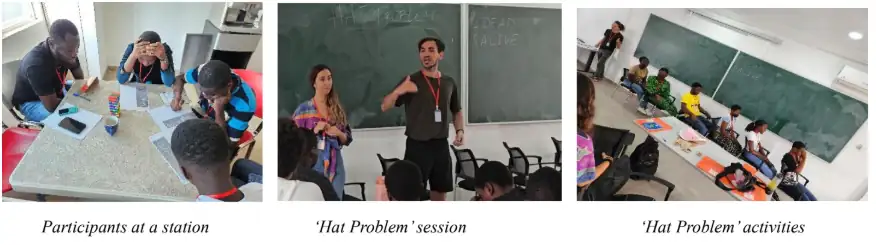
Mathematical thinking sessions focused on structure, reasoning, and explanation. Games such as Nim, multiplication challenges, and the well-known Hat Problem pushed students to plan ahead and justify their choices clearly. In modelling sessions, students simulated disease spread using dice, connecting probability to real-world scenarios. They also explored climate data, learning how mathematics can help describe patterns in the environment. When Professor Nick Monk led a session on mathematical biology, the interest extended well beyond the scheduled time, with students continuing to ask questions long after the session ended. For many of them, it was the first time they had seen mathematics used to describe living systems.
Physical activities formed an important part of each day, not as simple breaks, but as structured learning opportunities. Counting games, relay-style challenges, and group problem-solving tasks required coordination, attention, and quick reasoning. On the final day, these elements came together in a large Treasure Hunt, where teams moved between stations solving problems under time pressure. Some teams moved quickly, others struggled, but every group experienced the importance of teamwork and communication in solving complex tasks.
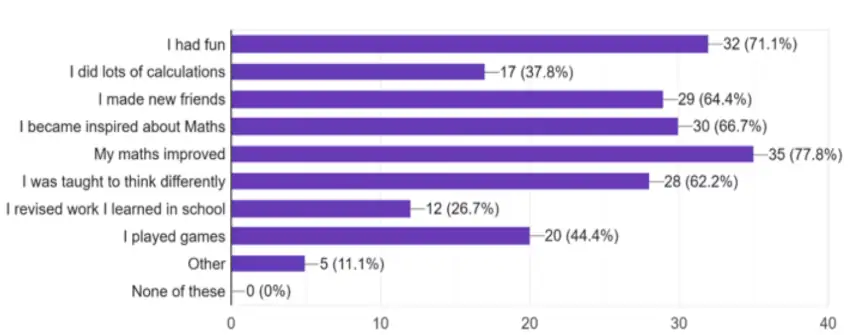
The impact of the camp became visible in the surveys collected at the end of the programme. More than three quarters of participants reported that their understanding of mathematics had improved, while two thirds said they felt newly inspired to continue exploring the subject. Many students wrote that they now approached problems differently, taking time to think rather than rushing to memorise answers. These are modest outcomes on paper, yet they represent meaningful shifts in confidence and attitude that can influence learning far beyond the camp itself.
Support from SAMI remains visible throughout the process, while AMI Ghana led the organisation and AIMS Ghana provided the space, structure, and academic environment needed to sustain the programme. After eleven years, the Allotey Maths Camp is no longer an experiment. It has become a system that reliably introduces students to computing, modelling, and strategic thinking, filling important gaps left by standard curricula while demonstrating that serious mathematics can still be joyful.
What happened in Accra in 2024 does not stand alone. It connects to similar camps taking place across the continent, including those in Nyarongi and other parts of Kenya, Comé in Benin, Davié in Togo, Musanze in Rwanda, and Bahir Dar and Wollo in Ethiopia. These locations share common principles—learning through play, collaboration across cultures, and deep engagement with mathematical ideas—forming a growing African network of mathematics education built on shared practice rather than isolated effort.
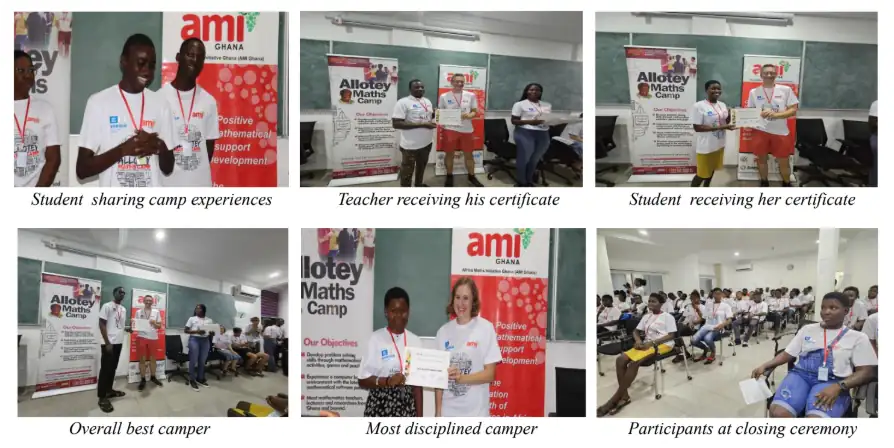
Looking ahead, the direction is clear. With steady support and continued collaboration, this model can expand to reach more students and support more teachers. Each new camp strengthens the network and adds new experience to the collective knowledge base. Over time, more young people will leave school not only knowing mathematics, but understanding that it is something they can question, apply, and enjoy with confidence.