My Experience at Scratch Day 2025 – A Celebration of Creativity and Learning
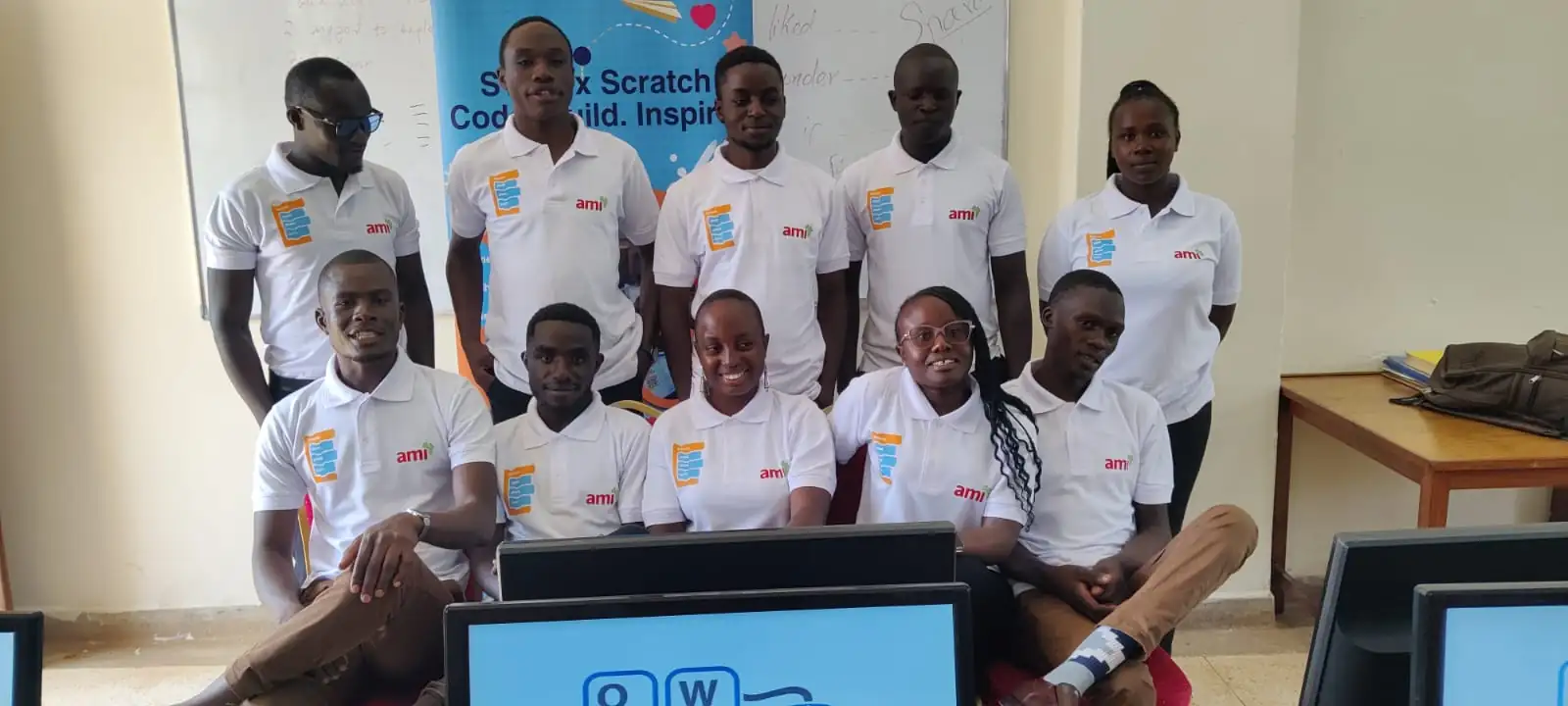
On May 29th, 2025, I had the incredible opportunity to represent the African Maths Initiative (AMI) at Scratch Day 2025, held at the vibrant STEM Power Center of Masinde Muliro University of Science and Technology (MMUST). The event was a lively and inspiring gathering of learners, educators, and volunteers, all brought together by a shared love for creativity, technology, and learning. A total of 183 students and 21 educators spanning from schools across Kakamega County participated in the day’s activities, and their excitement was palpable from the very beginning.
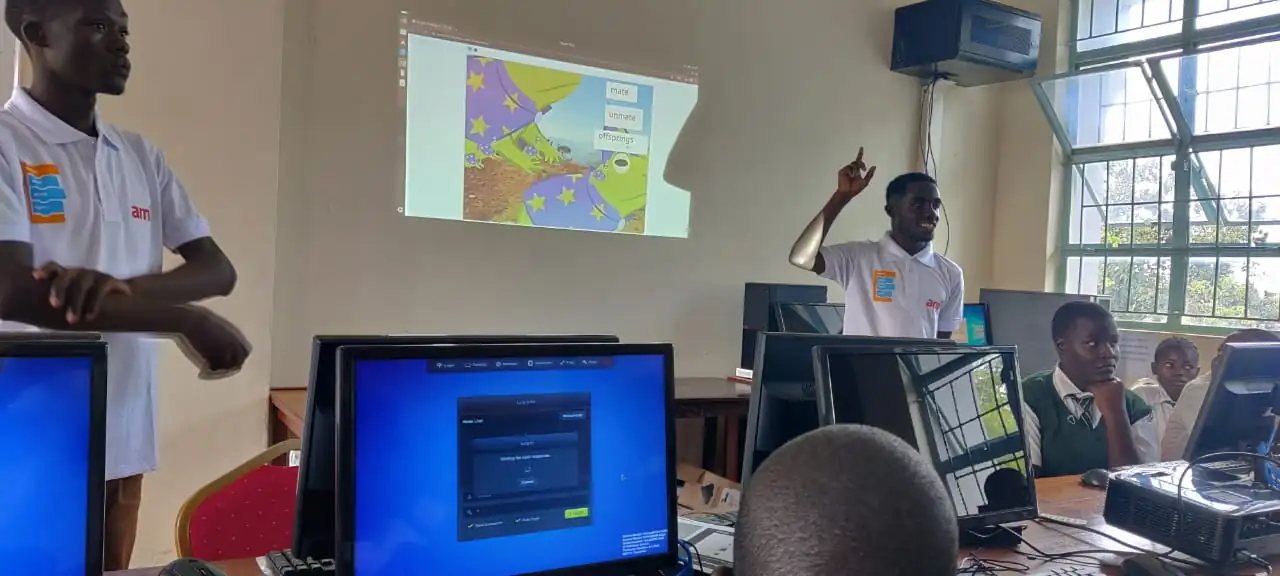
As one of the key facilitators for the event, I led one of the stations in a scavenger hunt, the Design Studio. This was a hands-on Scratch exploration space that quickly became one of the most energetic and engaging corners of the day. I also had the honor of serving as a judge during project presentations later in the day, which gave me a front-row seat to the brilliance and innovation of the young participants.
The day began with warm welcomes, introductions, and a high-energy scavenger hunt in 4 stations: the unplugged corner, the design studio, the reflection booth and the robotics arena. At the unplugged corner, learners were introduced to programming without screens, in a human robot game. They were paired in small groups to simulate giving and following instructions, just like programming a robot. The room filled with laughter and shouts of, “Turn left! Walk forward! Pick up!” as learners practiced giving precise commands,an activity that laid a fun, intuitive foundation for coding concepts.
Once the rotations began, the real excitement took off. In the Design Studio, students were introduced to Scratch through a variety of open-ended projects. We started with "Animate Your Name", where learners used letter sprites, motion blocks, and sound effects to personalize their names on screen. Watching their eyes light up as they saw their names bounce, glow, and spin was magical. It gave many their first “aha!” moment with coding.
One of the standout activities was the Silly Eyes project, where students designed creatures like crabs and monsters whose eyes comically followed the direction of the mouse pointer. Not only was it fun, but it also taught important Scratch concepts like sensing, motion, and conditional logic. I loved seeing the pride on their faces as their characters responded to user input. Some learners even began remixing their project, changing characters, adding speech bubbles, or adding new costumes and sound effects.
As students gained confidence, many moved beyond the starter activities to build their own mini-games and animations. There was constant collaboration where students asked each other how to solve a bug, helped others explore the "if" blocks, or challenged themselves to add scores or sound effects. It was noisy, joyful, and creative. The Design Studio truly became a space of experimentation, imagination, and peer learning.
Meanwhile, in other parts of the venue, learners explored the world of Arduino robotics. They were introduced to basic circuits, blinking LEDs, and tiny motors. MMUST volunteers guided them through wiring components and uploading code to make lights blink or sensors react. Some students tested small line-following robots and obstacle-avoidance circuits. It was incredible to see students who had never touched a wire before confidently building and testing devices by the end of the session.
In the Reflection Booth, students took a quiet moment to think about their learning journey. They responded to prompts like “What surprised you today?” or “What would you like to build next in Scratch?” Many shared how proud they felt after creating something of their own. Some even expressed their desire to teach what they’d learned to others back at school. For facilitators like me, these moments were just as rewarding as the big coding breakthroughs.
The day culminated in the highly anticipated Project Showcase. Groups of students presented their Scratch creations in front of judges, facilitators, and fellow learners. As one of the adjudicators, I was deeply impressed by the range and depth of the projects. Some students had created storytelling animations, while others developed simple games or interactive art pieces. What stood out even more was the confidence with which they presented their projects, explaining their logic, how they debugged issues, and even offering ideas for future improvements.
Learners showcased different projects with various themes - halloween, area and perimeter, volume, music and electrical circuits . Each project told a story not just about the subject matter, but about the learning journey behind it. As a judge, I had a hard time selecting winners because each project was unique and reflective of genuine creativity and effort.
Throughout the day, I felt a deep sense of joy and purpose. Working alongside facilitators from INNODEMS, MMUST and fellow educators was a powerful reminder of what’s possible when we come together with a shared goal to spark curiosity and confidence in young minds. The collaborative spirit, the laughter, the learning, it all came together to create something truly special.
Scratch Day 2025 was more than an event; it was a celebration. A celebration of learners becoming creators. A celebration of ideas, imagination, and the joy of discovery. I’m grateful to have played a part in it as a facilitator, a mentor, and a learner myself. The experience reaffirmed my belief in the power of creative technology education and the endless potential of our youth when given the right tools and support.
As I looked around at the end of the day at the smiles, the shared stories, and the proud learners, I knew that this day would leave a lasting impression. Scratch Day 2025 was just the beginning. The real journey continues in classrooms, homes, and communities, where these young creators will carry their new skills and dreams forward.